Health and Wellness – Kalon Women July 2010 Issue
Women have been instrumental in advocating for women’s health and for taking the lead in helping to save the  health of our planet another form of ―wellness.
To view full article click here

Women have been instrumental in advocating for women’s health and for taking the lead in helping to save the health of our planet another form of ―wellness.
To view full article click here
It was a short 162 years ago when a small group of women and men met to discuss what was then considered a most radical idea: that women should have the right to vote. It was in 1848 and their work launched what would turn out to be a 72-year fight for suffrage.
To view full newsletter click here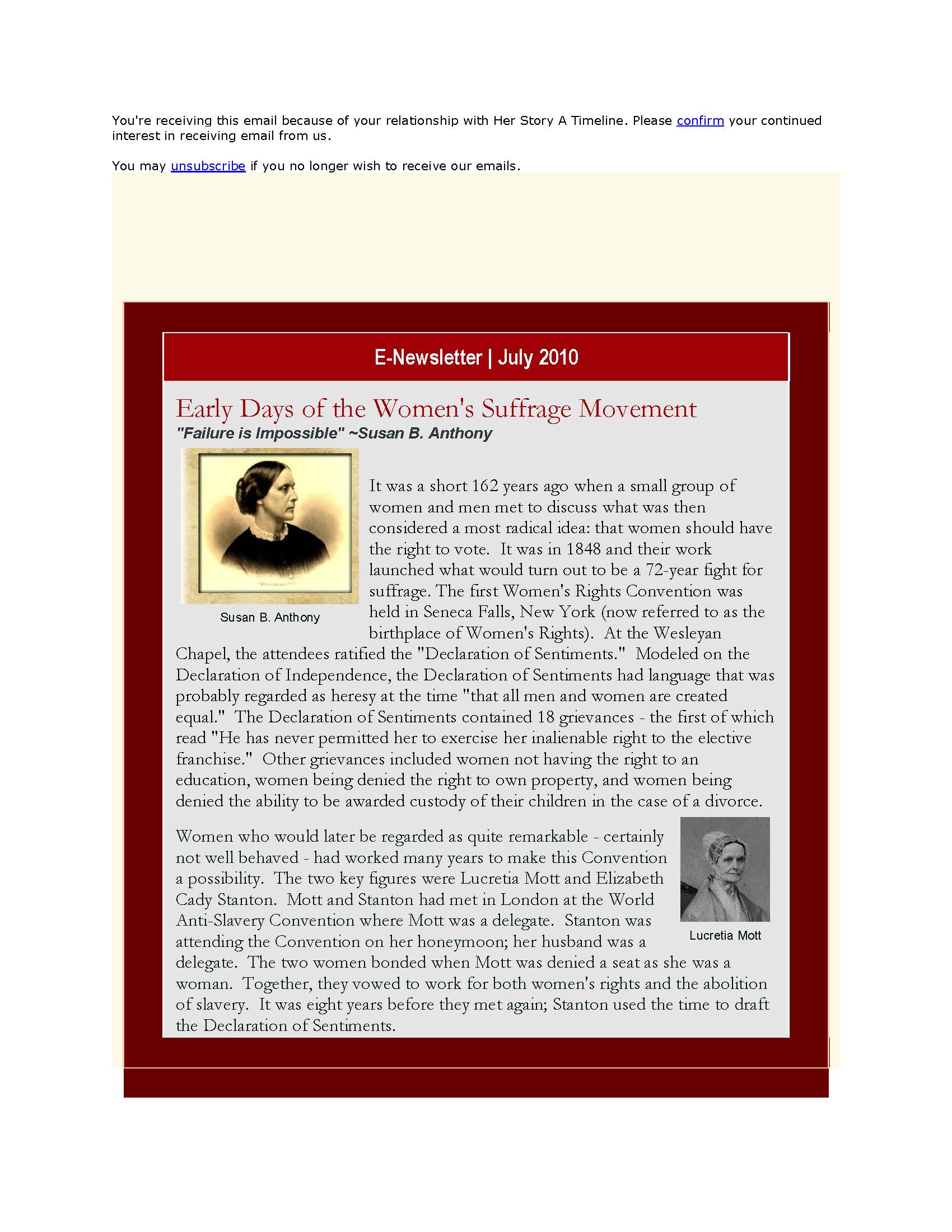
In the United States, June means summertime. School is over. For many of us it is time to pack the family into the  minivan (or go to the airport) and see America! Of course, it wasn’t always this easy to travel around our great country. Join us as we describe some of the women travelers and explorers profiled in Her Story: A Timeline of the Women Who Changed America
To view full article click here
In our newsletter this month, we want to identify and celebrate some of the many women who have military connections. For June, of course, comes right after our celebration of Memorial Day on the very last day of May. The holiday honors citizens who have served in our military, many of whom have died while in service to our country’ liberty.
To view full newsletter click here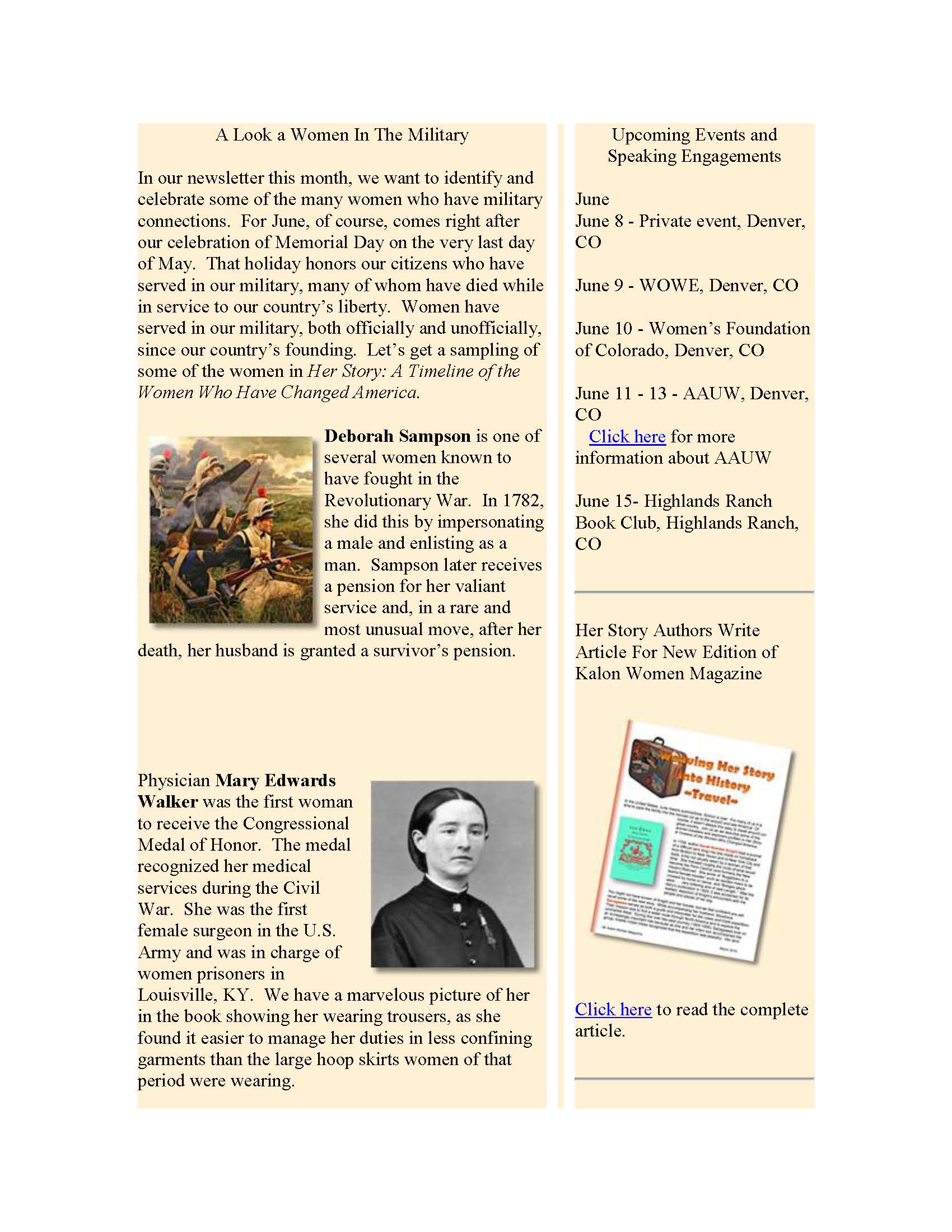
In May of each year, on one day, most of us take some time to celebrate our mothers. It would be nice to celebrate  the women who gave birth to us, the women who nurtured us through many of life‘s ups and down and the women who made sacrifices for us so that we could live our dreams EVERY day, but our busy lives generally preclude that option. One special day and its celebration is a declaration of the importance of motherhood!
To view full article click here
Do you have new and creative ideas you wish to develop as a business? Or are you already a business entrepreneur? Then you are following in  the footsteps of many women before you who both developed new business concepts and contributed significantly to the strength of American businesses throughout U.S. history. In this month’s column, we’ll acquaint you with some of the women entrepreneurs who changed the “Her Story” of business in our country.
To view full article click here